West Africa Discovery website

Please visit the West Africa Discovery website to learn more about West Africa and our selection of sustainable tourism tours, accommodations and voluteer projects.
Showing posts with label ghana. Show all posts

Wednesday, 23 March 2011

Asabaako Festival: a Celebration of Music, Peace and Culture on a Beach in Ghana

At West Africa Discovery we love to hear about community based events organised in West Africa for the people by the people, especially if it entails amazing music, a fun loving atmosphere, beach parties and loads of dancing!

Our friends at Blogging Tracks have recently organised, in association with the Moringa Tree, a festival in Ghana aiming to bring people from around the World, Ghana and the local community together to experience the fundamental universal constant which is Music! Below is an account of the organisation that went in to the event, how it all went and the vibe that transcended the whole festival. Enjoy, it's a great read and there are some amazing artists that you may want to check out.

AND SO...The Asabaako Music Festival train pulled into Busua village last weekend for two days of live music and SERIOUS beach parties!! After 2 years of figuring out how this might work and a mad few weeks of preparation, everybody came together to make the Asabaako Music Festival a very special event, combining the most beautiful beach setting with a mix of traditional to modern African and African-inspired music. People came from around Ghana and mixed with those from around the world, alongside a village of people whose energy, enthusiasm and welcome left everybody awestruck.


Our Asabaako DJs Kobby Graham, Rita Ray, DJ Juls and Guynamite made daytimes chilling by the beach, sipping on coconut milk and rum, just that little bit more perfect, spinning anything from Afrobeat to hip hop, afro-funk & soul to high life, reggae and loads more.

Asabaako is a way for us to provide a platform for younger artists with Bless the Mic, bringing a bus full of underground MCs from Takoradi to tear up this usually quiet village resort. Performances from Sketches, Spooky, Nero, Jay Billz, Pictures, King Arthur, Scurry plus Macho Rapper, while Kweku Ananse brought a whole different vibe with his solo balafon performance.

The Agona brass band got everybody moving, while one of Ghana’s hottest rappers, Yaa Pono, took the crowd in the palm of his hands with his distinctive flow and hard hitting punchlines.

Wanlov the Kubolor, our headline artist representing Pidgen Music, had already got the village’s attention by strolling through town in his trademark dreadlocks with nothing but a tight pair of swimming trunks. But things got really interesting when he introduced his African Gypsy band, including a French accordion player and violinist, to bring something completely different to Asabaako.

And the after parties...WOH. Man....they were serious. They were serious beach parties man. I can’t even really put them into words. Big ups to our Busua DJs, Shocka and Andy Stoner!

Smashed it.


It was a fantastic community effort, with boys from the village helping to put the stage together, running around picking up last minute generators, getting food together for our artists...and best of all, the village LOVED it. I’ve been walking through the street since having anyone from kids to old women shout “ASABAAKO!” at me as I go by. Which is nice.

OK, so preparation was a little complicated. What was supposed to be a 2-day beach party about 5 weeks before, took an interesting turn when US hip hop legend Talib Kweli tweeted to his 260,000 followers that he wanted to perform...despite the difficulty we knew we’d face, we gave it a go, had it lined up, but were then forced to cancel due to sponsorship problems...eventually taking us BACK to our original plan... (That’s a very long story short)

The past year has been an amazing experience of highs and lows, and it’s as if that was all building towards some crescendo of madness that carried into the last few hours of Asabaako 2011. Talib, no Talib....sponsorship, no sponsorship, bit of sponsorship maybe....but we got there, we did it, despite the various and plentiful challenges and pitfalls, we did it, and not without thanks to the dozens of people who helped us, along the way and on the day itself. It’s been an emotional rollercoaster like nothing you would ever imagine, but we’ve got there.

BIG LOVE to (in alphabetical order)...The first Asabaako is done, and preparation is underway for the next with an increased programme and international artists currently in discussions. And I’m telling you...BIG tings about to happen here in Ghana!

So I guess this is where we say thank you...It’s quite a list. So let’s get on with it. Thank you EVERYONE for EVERYTHING you’ve done to help us get where we are, for those who helped us out when times got hard, who believed in us when doubt reared its ugly head. Your support, guidance, advice, contacts and stress relief techniques have started something that more and more people now see will really, truly grow into something very special.

Achoo, African Rainbow (Bill, Sewa, Nana and the team), Africa Cola (Aicha, Pierre and the team), Akua and Louise, Akwaaba UK (Eben and Elliot), Ameyaw Debrah, Amy Clark, Bob Gallagher, Bibie Brew, Bill Bedzrah, Ben Bish Clark, Black Star Surf Shop (Naiomi, Yaw, Kofi, Charles, Ernest, Nat and the team), Bless the Mic, Busua Inn (Daniel & Oliver), Brown Berry, Dadson Lodge (Mama Betty, Julie and my many Dadson wives), David Thomas, Ebeneezer Bentum, Entertainment Revolution (Regis and Ben), Fayzbuqbwoi AbeikuQuansah Breezy, Fiona Stewart, Ghana Facebookers (Nana Yaw, Bizzy Mill, Eli, Gamel et al), GhanaWestCoast.com (Lorena and Stephen), The supportive family!, Green Turtle Lodge (Tom and Jo), Ian Bowden, Iso Paelay, Jay Hill, Jean Berthon, Jambo Lafferty, Jon K Fidler, Kajsa, Kate Marriage, Kobby Graham, Kofi Amponsah, Kweku Ananse, i-cr8 (T, Alima and the team), Lisa Lovatt-Smith of OrphanAid Africa, Macho Rapper, Macjordan, Mantse, Marie Howell, Melody FM and Gyandoh, M3nsa (next year I'm telling you!!), MMRS Ogilvy (Miguel, Nathalie, Fred and the team), The Moringa Tree (Chris Vaughan & the team), Nana Chillin, Nana Queci Otu Nketsia, Ms Naa, Neon Comms UK (Sam, Rols and the kids), Nick, Tom, Steve and the “overlanders”, Nii Ayertey Aryeh, Nii Sai Doku, Paa K Holbrook Smith, Paa Kwesi aka

RASTAMAN, Panji Anoff and Pidgen Music, Paul Stagg, Pete Nardini (Surf Shop & Black Star Development NGO), PY, Quantas, Rita Ray, Sidique, Skyy TV and Radio, The SRK, Stak Dollar Bundles and the OC crew, Takoradi Facebookers, Tacitus, Trenton Birch, Uncle Ralph Casely-Hayford, Valerie Lesbros, Vodafone (Cynthia and the B&S team), Wanlov the Kubolor, Yaa Pono, Yemisi Mokuolu of Out of Africa, and everyone else who's pointed us in the right direction or lent a helping hand along the way.

And a special thanks to all the people of Busua for letting us party on your beach, partying alongside us, helping to get everything together and for your continued support. We hope the festival will continue to bring business your way and show the world what a beautiful place you have here.

So, another mighty step... and now we continue. Join our Facebook page at www.facebook.com/asabaako or visit www.asabaako.com for updates on the next event.

For more information on West Africa, its rich local heritage, and tours, accommodations and volunteer projects which will give you the opportunity to discover first hand how beautiful this region is, visit the West Africa Discovery website, or you can join us on Facebook.

Tuesday, 24 August 2010

Adventure travel in West Africa - Part 2: Ghana

In our second instalment of West Africa’s best adventure travel destinations, we explore Ghana, a Land of sunshine and reputed for the friendliness of its people. Rich in history, and home to the Ashanti Kingdom, a once prosperous and powerful dynasty, this country is a great place to start of in Africa due to its ‘user-friendliness’ and offers a great deal of opportunities for the demanding traveller looking for the next best beach, the most succulent dish, the intense cultural encounter, or the fast paced adventure activity.

Ghana is on the Gulf of Guinea, the ‘under-belly’ of West Africa, facing south towards the Atlantic Ocean.In terms of geography, the country presents flat plains, low hills and a few rivers. The coastline is mostly a low, sandy shore backed by plains intersected by several rivers and streams while the northern part of the country features high hills and rolling plains. Southwest and south central Ghana is made up of a forested plateau region consisting of the Ashanti uplands and the Kwahu Plateau and the hilly Akuapim-Togo ranges are found along the country's eastern border. Ghana's highest point is Mount Afadjato which is 885 m (2,904 ft) and is found in the Akwapim-Togo Ranges.

For all of those who are in to medium intensity adventure travel or if you are looking for activities that are not solely for making your muscles sore, but are willing to combine it will other activities that will soothe your soul, this is the place to come. Hiking, mountain biking, surfing, whale watching, not to mention the overwhelming smells, bright colours, and entrancing music are some of the awe-inspiring experiences you can have in Ghana.

Why not go on a mountain biking excursion through a rural setting, stopping off at mud-hut dotted villages for a rest or to sample the local Jollof rice dish (tomato-flavoured rice to which meat or fish is added) for lunch? Or how about a more intense experience trekking up Mount Afadjato where you can spend the night in a homestay and enjoy a relaxing evening of music and good food (I’ve heard of this place where you can eat village grown mushrooms in a spicy tomato sauce with rice. Vegetarians, eat your... artichoke heart out).

For more information on how you can find yourself in these experiences, click here.

If you are looking for something different, look no further than the only tree-top canopy walk in Africa located in Kakum National Park, home to over three-hundred species of birds, unique monkeys and the highly endangered forest elephant and bongo antelope. The rope bridge suspended 100-110 feet off the forest floor yields an extraordinary sweep of nature from what feels like just below cloud level, a must-see if you’re not afraid of heights.

Down by the Ocean, there are plenty more opportunities for adventure. Ghanaians are natural ocean goers, maybe due to their culture of fishing, and this is reflected in the activities that are on offer. There is the possibility to rent a fishing boat in order to spend a whole day catching your lunch for the evening and learning the different traditional techniques that the locals use to sustain their livelihoods. You might even catch a glimpse of a whale poking its tail fins out of the water! Or if you prefer a more relaxing experience, there are plenty of opportunities to take a traditional canoe up one of the many tributaries and try your hand at fresh water fishing.

A great accommodation idea that offers these activities can be found here.

Ghana’s coast also offers some of the best waves in West Africa (you know where I am going with this), and therefore surfing and body-boarding are also on the ‘adventure menu’ for you to try and practice.

Busua beach, in the west, is one of the best locations for surfing in Ghana and is a wonderful mix of a traditional Ghanaian coastal village and a tourist destination, allowing you to get to know the people and culture of Ghana, meanwhile providing you with many entertainment options in a very relaxed atmosphere. Beginners and veterans alike are welcome to try their hands at the different sized swell found along the Busua stretch of coast.

To find out more about the surfing opportunities, click here.

Of course, as always when visiting a West African country, there is a richness of culture, history and biodiversity to discover, but you would need a life-time to make your way around the amazing things to see and do. The West Africa Discovery web portal has selected a variety of tours, accommodations and volunteer projects that not only give you the opportunity to experience West Africa to its full potential but also make sure that the tourism projects listed have policies that provide benefits to local communities in the area and that, through their activities, make sure that negative impacts on the local heritage are minimised.

For more information, email us at info@westafricadiscovery.co.uk or join us on facebook & twitter to keep up-to-date with our progress, and that of the West African sustainable tourism industry.

Friday, 2 July 2010

Ghana: home to the Black Stars, but also much more than that!

After dispatching the USA in their last game of the World Cup, Ghana made history as being the fourth African team to reach the quarter final when they faced Uruguay tonight. Ghana has already done better than four years ago when they were knocked out in the last 16. It seemed that all of Africa celebrated Ghana's qualification for the quarter finals of the World Cup. And many hoped the Black Stars would beat Uruguay to become the first African team to qualify for a World Cup semi-final. Unfortunately, after an intense game and many heart stopping moments, Ghana lost on penalty shoot-outs but went home heroes to their own country who welcomed them with all the Ghanaian pride you could imagine.

Not only does Ghana have a world class team who represent a whole continent, but closer to home they also are one of the friendliest, most stable countries in West Africa with rich local heritage.

From the pristine sandy beaches in the south to the hilly and rainforest covered north, bordered by Togo to the east, Côte d’Ivoire to the West and Burkina Faso to the North, Ghana is truly a gateway to West Africa. And what a gateway it is! For the beginner to Africa, the traveller who wants to experience the ‘dark continent’ first-hand, the cautious tourist wanting to learn more about West Africa’s culture, this country is a great choice. Here are a few examples of the unique things you can do and see in the Black Stars home country.


For the avid historian
Ghana, unfortunately, is infamously known for being one of the main departure countries from which the slave traders filled their ships with ‘cargo’ to take them to the ‘New World’, and the remnants of this barbaric trade are still present. On cape coast near Accra, the capital, Elmina castle is the oldest European building in sub-Sahara Africa. According to records, thousands of captives passed through the dungeons of both castles to be shipped as commodities.

Museums are also numerous, and you will not be disappointed with the amount of choice. From the ‘National Museum of Ghana’, home to a varied collection of objects relating to the ethnography and culture of Ghana, to the ‘Dubois Memorial Centre for Pan African Culture’, a national historic monument in its own right documenting the life of the influential Du Bois family, passing by ‘Museum of Science and Technology’ displaying and preserving natural history specimens found in Ghana, you will need an entire lifetime to satisfy your curiosity.

Recently vestiges from an ancient civilisation were found in a remote part of the country which has questioned many theories that were put forward about the history of the regions people. To read the BBC article on the find, click here.

Or to learn about the possibilities to visit the country to learn about the history of slavery, click here.

For the budding naturalist
The vegetation of Ghana ranges from Evergreen forests and Savannah grasslands, to the lowlands to the highlands which boasts the highest point in the country, Mount Afadjato which is 885 metres high and found in the Volta region. The landscape is very suitable for both hiking and trekking which will allow you to get up-close to the wide variety of flora and fauna species.

For example, Tafi-Atome in the Volta region, is home to 300 endangered Mona and Pata Monkeys and is a traditional conservation area backed by statutory enforcement in co-operation with local communities. These monkeys are found in a remnant patch of forests, which has survived fire and human disturbance around the village.

Agumatsa wildlife sanctuary is another place of interest for those interested in wildlife. The area boasts Ghana’s highest waterfalls. The beauty of the falls is enhanced not only by the towering face of the gorge but most impressively by the several thousands of fruit bats clinging to its sides. At the base of the falls, in the surrounding forest, butterflies of various colours and other wild animals make the area significant for conservation. The falls also plays an important part in the cultural life of the communities around it. The people regard it as a fetish protecting them in all walks of life.

For a holiday idea that will take you to the sites mentioned above, click here.

For the culture enthusiast
Like the rest of West Africa, Ghana has a rich cultural heritage
which has been passed down from generation to generation for millennia, and its origins have been lost in the midst of time. However, being ever present gives the open-minded traveller a glimpse into the various rites, rituals, ceremonies and belief systems which make this country and its people ‘oh so special’.

One of the most important cultural remnants from a bygone era is the Ashanti stemming from a once prosperous Kingdom that ruled the region. There are certain days each year on the Ashanti calendar that are set aside for a celebration at the Royal Palace. This ceremony is called Akwasidae.

During the celebration, the King is seated under a spectacular umbrella of colourful, draped cloth and is adorned in vivid cloth and massive gold jewellery which is centuries old (the Ashanti gold jewellery and masks are considered masterpieces of African art). This traditional ceremony takes place in one of the last African Kingdoms to have kept its ancient rituals alive.

But Ghana is also known for its overwhelming hospitality, and there will be no lack of people who will offer to show you their home, offer you meals or just to have a friendly chat. In the remote villages of the Volta region, you can experience the culture first hand by learning how to cook the various traditional meals, discovering the history of weaving in this area and trying your hands on the weaving process, or visiting some farms in the local communities to learn how to use local farming tools.

There is no lack of educational opportunities in Ghana, and you will surely learn a thing or two from this holiday idea.

For the adventure fiend
For the adrenaline junkie, the exercise addict or for the simple traveller looking for a bit of fun, Ghana offers the possibility to partake in an array of activities including hiking, mountain biking, surfing, canoeing, canopy walking, fishing, and many more.

Let’s take example on the possibilities of surfing. Ghana’s south coast is perfect for those wanting to learn how to ride waves. Constant warm water, no crowds and perfect waves (that’s right, no fighting for waves and no wetsuits) make Ghana’s coasts a great location for beginners and intermediate surfers. To learn more about the surfing possibilities, click here.

Sticking to the water theme, the marshes created by the Volta River, create a rarely visited environment which allows for excellent canoeing where you can observe an exotic collection of birds and a baobab grove.

Or if you fancy something different, in Kakum National Park you can find the only rainforest canopy walk experience in the whole of Africa. Suspended 100 feet above the ground, this offers you what is truly a bird's eye view of the rainforest. At this height, you don't have to be an expert to identify the colourful patterns of tropical birds as they glide through the forest below you.

Unfortunately I could not include all the amazing things available to do and see in Ghana, but I am sure that through the above description you have become curious to know more. So do not hesitate to get in touch with us at info@westafricadiscovery.co.uk with any queries about this beautiful country or any of the other 15 West African countries. Or you can visit our website here to discover all the other unique and awe-inspiring holiday ideas available in one of the most undiscovered parts of the World.

Thursday, 10 June 2010

Good Luck Cameroon, Côte d’Ivoire, Ghana and Nigeria!

Out of the six African teams in the World Cup this summer, four are from West Africa. It is the first time that the World Cup has been held on the African continent, and it would be a momentous occasion for its people and African football if one these teams could go all the way. West Africa is a dominant force in African football and regularly produces stars that play for top European clubs. We took a look at the four teams from West Africa and their chances of success in this World Cup.

Cameroon

Also know as the Indomitable Lions, a tribute to their habit of grinding out results, Cameroon have long been flag bearers for Africa on the world stage since their first world cup in 1982.

Cyprian, one of our tour operators in Cameroon feels confident;

“I am almost sure that Cameroon can get to the second round at the world cup, but we still need discipline in the team to produce good results.

Our super star Samuel Eto’o has had some arguments with the management. If this is resolved then he will be explosive at the world cup and his performance could help Cameroon to the quarter finals at least. That is my forecast, anyway, let’s wait and see!”

With a group including the Netherlands, Denmark and Japan it will be challenging, but not impossible. They must find a way of getting the best out of Samuel Eto'o to progress.

Côte d’Ivoire

In Côte d’Ivoire everyone is wearing orange – the colour of the strip of their national team, The Elephants. Hopes have been dampened by the fact there’ll be no Didier Drogba, but they're managed by Sven-Goran Eriksson who may have a trick up his sleeve (some England fans may disagree!).

I read that one hundred Côte d’Ivoire fans are heading to South Africa on an all-expenses paid trip to watch their team. The country's national supporters club, the National Elephants Supporters Committee, drew the 100 names from their membership. Anyone with a $4 membership was included in the draw, touted as a way to thank ordinary fans who would never be able to afford the trip to the World Cup. A local tour operator is offering a similar trip for about $4,000. Whilst this is a nice gesture and will be a great trip for these fans, it highlighted to me how unattainable it is for a lot of local fans to attend the World Cup.

Côte d’Ivoire seems to be attracted to the ‘group of death’ with the best teams in major tournaments. This time round is no different with a group including Brazil, Portugal and North Korea. There will be a chance for the talented Aruna Dindane and Salomon Kalou to make their mark, and the side has strength in holding midfielder Yaya Touré. Sven Goran-Eriksson needs to improve the underachievement of a team beaten by Algeria in the quarter finals of the Africa Cup of Nations.

Ghana

The Black Stars’ appearance at the World Cup in 2006 finally brought international recognition to a team that has long been one of the greats of Africa but somehow never qualified for the big event. They did well in the last finals in Germany with an adventurous style that won them many fans, but ending up losing to Brazil in the second round with key players missing.

Manuel our local expert in Accra says;

“We have hopes Ghana will do well in the Group stage to progress. 2006 was Ghana’s first time at the World Cup and we finished the group stage second. So I am expecting the same this time around!”

Their group includes Australia, Serbia, and Germany. Kevin Prince-Boateng's decision to play for his parents' country of origin means he could face his brother, Jerome, who has been selected by Germany where they were born. Michael Essien is injured so there is little star quality but their powerful style could be troublesome to other teams in their group.

Nigeria

This will be the Super Eagles fourth appearance in the World Cup. Meetings with Ghana in the Africa Cup of Nations have thrown up some epic games, although the Nigerians have lost the last two in the latter stages of recent tournaments. A meeting in the quarter final would be an epic encounter and sure to split the local South African support.

Nigeria will face Argentina, Greece and South Korea in their group. They have suffered a blow with Chelsea midfielder Mikel John Obi ruled out through injury, but with a squad largely drawn from top clubs it should be a confident team. Nigeria will be looking to their gifted attackers Obafemi Martins and Yakubu for goals.

Group B: Argentina/Nigeria/South Korea/Greece

Group D: Germany/Australia/Serbia/Ghana

Group E: Netherlands/Denmark/Japan/Cameroon

Group G: Brazil/North Korea/Côte d'Ivoire/Portugal

Visit the Fifa website for full group listings and fixtures.

Saturday, 5 June 2010

The World Cup: Local enthusiasm! Local benefits?

With just over a week to go, millions of people around the world will be watching their team in South Africa competing for the ultimate prize in football, the World Cup. But for many, particularly in Africa, this world cup has taken on greater significance. When South Africa was chosen to host the 2010 World Cup, it was hailed as a chance to 'give something back' to Africa. However, will the biggest event on Earth benefit some of the planet's poorest people?

The event could provide many benefits to local communities through local trade. However, according to an article in The Independent, informal traders who are a crucial part of African economy have been banned from around the 10 stadiums, reducing their chances to gain from the increased tourism. Creating more jobs for local people is also in question. The future of a project to set up public bus transport is in doubt because the government is cautious about standing up to South Africa's powerful minibus-taxi industry.

There are also question marks over Fifa's internet ticketing system that has left most of the continent unable to buy seats. Fifa kept ticket sales online until 15 April when poor sales forced them to open ticketing booths in the host country. Even though there will be a record six African teams in the finals; South Africa, Ghana, Côte d’Ivoire, Cameroon, Nigeria and Algeria, only 11,000 African fans outside South Africa have purchased tickets. Should there have been more effort to include the fans of these countries?

As well as low ticket sales, especially in the northern hemisphere, tourism visitor figures for the World Cup have been revised down to 200,000 – about the same number of people that visit South Africa during an average summer season from November to February. Local airlines and hotels have cut prices for the coming month, and local businesses are worried about the lack of financial benefit the event will bring.

However, there is some good news. Fifa president Sepp Blatter, in an interview, said that the event is about "giving back to Africa what the continent has given world football through its players.” During a press conference, the organisation pointed to the "centres for hope" - 20 football academies that it will build after the cup. These could provide opportunities to African youth to develop themselves not only in football, but also through education. Examples of how successful these academies can be are The Craig Bellamy Foundation set to open this September in Sierra Leone, and the Right to Dream Academy in Ghana.

Elsewhere, organisations such as Oxfam are trying to use this world Cup and football to connect people around the world. Their new campaign calls on fans to upload a video of their tricks to the website, www.dontdropaid.org. The campaign calls on governments not to drop the ball on overseas aid, which helps to pay for kids to go to school and for medicines and bed-nets that save the lives of millions of people who would otherwise die from HIV or malaria.

Charles Bambara, a former player in the Burkina Faso premier league who works for Oxfam in West Africa, said: “Across the continent, from Algeria to Zambia, football brings a massive ray of hope to people’s lives. We want to tap into all of that energy to say: don’t drop the ball, don’t lose sight of the goal, which is to end poverty and make life better for the world’s poorest people.”

However, despite the event being marred by controversy, one thing is for sure, this event will unite Africans from all over the continent during the World Cup. Voice of America spoke to Ben Owusu from the Ghanaian community in South Africa. He says that Africans will be uniting behind an entire continent;

“We all are coming together this time around to support that particular African team that is playing that day. To come together is the only way we are going to come close to winning the Cup. Whatever African team does well, it will be a victory for the whole of Africa. This is Africa’s World Cup.”

“Brazil, Italy, England and Germany and all those other fancy teams must realize when they land here in South Africa that they are not only playing single African countries," he said. "They must know that they are playing against an entire continent, with its population of one billion firmly behind it … the Cup should remain in Africa.”

This is going to be a very exciting month for the players and fans from the four West African nations playing in the tournament. We will update you with information on the Cameroon, Côte d’Ivoire, Ghana and Nigeria teams over the next week for the build up to the big event. For more information on West Africa, or to discover how you can be a part of the World Cup by visiting the continent yourself, visit West Africa Discovery.

Thursday, 27 May 2010

Surf tourism in West Africa: a Working Model for Responsible Tourism.

Sun, sea, waves, tanned bodies and relaxed attitudes are all part of the surfing lifestyle, but it has also come to my attention that tourism can be a part of the ‘gnarly’ world of riding waves.

Whilst researching alternative tourism activities in West Africa, I came across a great number of surf shops, surf camps and surf tours along the coastal areas in countries such as Senegal, Liberia and Ghana. These are little known projects, and not only take the tourist to some beautiful beaches, but also have a low environmental impact and provide economic and development opportunities to the local communities through empowerment initiatives.

I became interested in how the surf tourism model could be considered as an alternative, unique and fulfilling experience for those seeking to discover the local heritage of a destination whilst being sure that the local communities will benefit directly from their presence on the ground.

Let me set the scene:

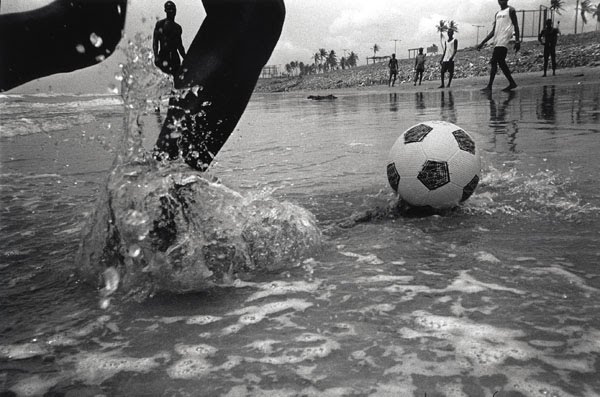
“After first impressions, the destinations look like paradise on earth. White pristine beaches bordered by palm trees, rolling green hills dominated by lush untouched rainforest, the silence only disturbed by the birds calling after one-another and the sound of the waves lapping against the shore, not to forget the sea at a constant warm temperature. As you look deeper into the local area, you will find friendly local communities, usually fishermen, who work hard to survive in the poverty stricken rural areas, children playing football on the beach who invite you to kick the ball about, a family having lunch outside on the porch who motion for you to come and taste a local dish, and everyone with smiling faces, showing that you don’t need much to be happy. You feel a sense of being part of the bigger picture, a sense of freedom, devoid of materialism and barriers, a feeling of, at last, finding the true sense of the word ‘living’.

Going back to your accommodation near the local surf shop, you hear the crash of the waves and feel an overwhelming need to be on a board, waiting for the swell so that you can get up and slide down the wall of water, trying to keep your balance but falling into the clear blue, warm water. You emerge into a soft breeze, dust yourself off and try again until you get it just right.”

Jesper, owner of a surf camp in Senegal adds to this: “Surfing in west Africa is something special. The sport has exploded the last 10 years, and therefore everyone is surfing. That brings many problems to all the famous surf spots around the world. In surfing jargon it's called localism. The people that live at the surf spot do not like that the tourists come and surf at "their spot". This leads to fights, negative atmosphere in the water and so on.”

He continues: “Senegal is very different, the locals are very happy for tourists to come. They welcome people in the water, talk and guide them. You will not see this in many places on the planet. Senegal doesn't have many ‘surf tourists’, and surfers who come to Senegal usually donate boards, wet suits, clothes and more. So it’s something special to surf here. This is one of the main reasons I moved here.”

Tempting hey? Well, not only are there opportunities to experience the above fantasy first-hand, but also you will be making a contribution to the sustainable development of the local community in the destination.

The surf shops in West Africa strive to train members of the local community to become surf instructors, therefore empowering them to earn a living for themselves and their family. Surf tourism usually being small-scale projects bring small groups of tourists to the area thus reducing the possible negative effects of tourism and nurtures the rise of local entrepreneurship to cater for the arriving guests. This, subsequently, boosts the local economy. Furthermore, all the produce used to cater for the guests are locally sourced, as well as the labourers who maintain the premises.

Jesper explains: “surf tourism provides many jobs for the locals. I employ six locals at the camp plus two more in the busy season. There is also more business for everyone living around the surf project. I think that is the main reason for the good atmosphere here.”

In terms of raising awareness towards the local heritage, it is needless to say that through involving the local community in the tourism project, the guest will experience the cultural aspect of the locality, by walking around the area and not being afraid to start chatting to an elder, the historical setting of the area will come into focus, and activities such as cycling, hiking or canoeing to areas where natural heritage is present will be a learning experience for anyone not used to these settings.

Most importantly, as a result of the increased interest to the local heritage, the local community will surely be inspired to protect it, not only because of a renewed sense of pride towards what they have always considered as ‘normal’ but also because of the economic opportunities that can be felt by conserving it and not destroying it.

Peter, founder of a surf shop in Ghana gives his opinion: "I feel that the development in of surfing in West Africa provides a somewhat unique opportunity to put forth a surfing development model that is truly responsible and built by locals. In the past, and in many places around the world, the surf infrastructure has followed a development model that is exploitative, although this exploitation is usually not intentional and there are good people involved. What has happened around the world is that foreigners stumble across a place in a developing country that eventually becomes a surf destination and by the time the locals have any idea about surfing or realize its potential as a business it is too late for them to get into the game. This results in a bunch of foreign owned surf businesses with very few opportunities for local ownership or locals people securing high end, well paying surfing related jobs. There is an opportunity to develop the countries of West Africa into surf destinations (the waves are there!) with an idea of local ownership or at least local/foreign collaborations in mind. This would provide a new, responsible way of doing things that respects the idea that local people have first rights to benefit from their local resources, which in this case are their beaches and some killer surf spots."

He continues objectively: "Training locals to compete with foreigners in the surfing business (surf shops, surf tours, surf camps and lessons) is a daunting task as cultural differences on how we communicate loom large. Lots of training is required for locals to understand what comes naturally to foreigners with regards to knowing what a surf tourist expects and wants and how to meet those needs."

Surf tourism, if managed properly of course, could be used as a working model to show how tourism can be used as a tool to alleviate poverty in local communities in destinations by boosting local economies, providing entrepreneurship opportunities, empowering members of the community and sourcing products and labour locally. It can be a means to raise awareness towards wealth of local cultural, historical and natural heritage not only to the visitor, but also to the local communities.

Why not see for yourselves how surf camps are set up, by checking out this example in Ghana.

Or if you desire to learn more about other projects out there, email us at info@westafricadiscovery.co.uk.

Thursday, 1 April 2010

Sports Tourism Big in Africa this Summer

It is set to be a year of massive sporting events, 2010 kicked off with the Winter Olympics in Whistler, and the whole world is anticipating the FIFA World Cup in South Africa this summer. There are many economic and social benefits to hosting international events. Whistler attracted 250,000 visitors to the area and $10 billion in revenues. Along with the financial injection, a host city will see development to infrastructure, increased jobs, and a continued development model of growth even after the event has been and gone.

The World Cup Finals in South Africa this June are on an even bigger scale and could contribute 50 billion rand to the economy, while tourism could generate a further 15 billion rand, with 3.5 million fans expected to attend the tournament. Not only will this be a great boost to the continued development of South Africa but surely for the continent as a whole.

Going to South Africa to watch your team play this summer is no cheap holiday. Once you have bought your flight, paid for a hotel and calculated spending money, the costs can run into the thousands. For those who want to see the Finals in Africa this summer there is another region that is equally amazing, but tourism there is less often on the media map. On the westernmost region of the African continent, West Africa is on the flight route from Europe and America to Cape Town and will be a great destination to visit during the World Cup.

The concept of sports tourism in West Africa is nowhere near the same level as South Africa, but that could be changing with the opening of new facilities such as the Right to Dream academy in Ghana.

Football is the biggest sport in West Africa. Watched and followed everywhere, kids and adults alike pretend to be in their role-models shoes by playing the ‘perfect game’ in every condition, sometimes only with a ball made from rags. Famous footballers such as Didier Drogba and Craig Bellamy are using football as a tool for community development and education through the setting up football and education centres for children in West Africa. It would be great to start channelling more money from sports tourism into communities in countries such as Côte d’Ivoire and Sierra Leone where it is needed most.

In June, West Africa will be alive with passion as their football heroes battle it out on the global stage. Bars and hotels across West Africa will be showing the games, and the local people will be more than happy to welcome and share a drink with a football fan. As well as going for the African football vibe, a holiday here is sure to give an experience of Africa quite different from the roaring stadiums and hustle bustle of crowds in the South African capital. There are four West African teams in the World Cup finals this year; Cameroon, Côte d'Ivoire, Ghana, and Nigeria. These are four very different West African countries with equally amazing possibilities for rich fulfilling natural and cultural holidays.

Cameroon, for example, is home of Barcelona striker Samuel Eto’o. Also dubbed 'Africa in miniature' due to the diversity of its terrain, biodiversity and cultures, Cameroon is one of the most exciting and unexplored countries in West Africa. From lush rainforest hiding waterfalls to pristine beaches, this country has a wealth of resources which can provide tourists with the most unique and unforgettable experiences. Click here for some ideas about holidays in Cameroon.

Another football role-model, Chelsea star Michael Essien, hails from Ghana, the country whose name means ‘Warrior King’. Often considered as the friendliest country in West Africa, this country was the seat of the Royal Court of the once powerful Ashanti Empire, whose vestiges are still visible today in the Ghanaian culture. Festivals, ceremonies and social values are a testimony to the prosperous past of this amazing country. Click here to discover the opportunities for travellers seeking adventure and exploration.

For anyone looking for a different and unique experience of watching the World Cup this summer, West Africa is well worth checking out. It is a culturally rich and diverse region, full of surprises and life changing experiences. There are a wide selection of tour operators whose holidays respect the environment and support the economies of local communities. By choosing responsible tours travellers can discover the beauty of West Africa safe in the knowledge that their trip is making a difference and that money from tourism is going to communities that will really benefit from it.

Friday, 5 February 2010

Africa Cup of Nations: Young Ghana team falter in the final

Last Sunday, on a cold day in London, I was settled in for a day of sport which of course featured the Cup of Nations final between Egypt and Ghana. The two hours of coverage on BBC2 gave me the chance to watch football in faraway lands, and enjoy a beer in the comfort of my living room; perfect. Unfortunately this was one of only three matches accessible to the masses (the semi finals were shown on BBC3) and scheduled at the same time as the big Arsenal v Manchester United match. You just have to see pictures of people around the world of people wearing replica shirts to know that the English Premiership match would receive the better coverage. Still, despite the poor scheduling I was looking forward to the final since I was pretty sure it was going to be a good match. Egypt were going for a record third cup title on the trot against a plucky young Ghanaian team who had battled through to the final despite injuries to key players.

It was a true African football classic; North Africa against West Africa, the oldest average team against the youngest, age and experience against energy and technique, and the Cup record holders against their closest rivals to this honour. Egypt didn’t play their best football, and the Ghana Black Stars impressed with their skills and swift counter attacks, however they were unable to prevent the immense skill of Egypt sub Mohamed Nagy Gedo who blew them away with his fifth goal of the tournament (despite coming on as a sub in every game!). The Egyptians dominated the competition on the way to their history making treble. The Pharaohs are now on the longest unbeaten run in the tournament's 53-year history (19 matches spread across the last three tournaments). Their defence only conceded two goals, and they also had the best attack with 15 goals. Player of the tournament was awarded to captain Ahmed Hassan, who is also now Egypt’s most capped player.

Despite Egypt’s record breaking triumphs, the Cup for me and most others was a little disappointing and marred by the violence at the start with the attack on the Togo bus. The pre-tournament tragedy resurfaced towards the end when the Confederation of African Football ridiculously decided to ban Togo from the next two tournaments. Fans at the stadiums were minimal with most flying in the day before because Angola is far too expensive for most to have long term stays. Even if many visitors will largely remember Luanda's hectic traffic, the building works, and the pricey cost of pretty much everything in Angola; locals took pride in showcasing the new stadiums and infrastructure.

The Pharaohs are the best in Africa for the time being, however after they missed out on World Cup qualification I’m counting on the West African teams shining for Africa in a few months time.

Contact me at harry@westafricadiscovery.co.uk

Visit www.westafricadiscovery.co.uk

Thursday, 10 December 2009

The World Cup effect: West African role models, Charity and Sports Tourism

West Africa in the World Cup

The 2010 World Cup Finals in South Africa next year will give African football teams a great opportunity to shine on the global stage (an estimated 715.1 million people watched the 2006 final). West Africa Discovery greeted news of Côte d'Ivoire, Ghana, and Nigeria’s qualifications with big smiles. After some friendly banter amongst the team about who we would be supporting next summer, we setup a poll to ask which team has the best chance of succeeding. My personal vote went to the Nigeria Super Eagles; it is always nice to see the underdogs succeed! The fact that half of the African teams that have qualified are West African goes to show the region’s dominance of African football.

On Friday afternoon I logged straight onto the sports news to check out the draw for the group stages. Obviously I was excited about England’s draw, but also wanted to check out who our West African teams had got. The draw for the group stages could prove to be challenging for the West African teams with Côte d'Ivoire drawing previous world cup winners, Brazil and Portugal, and the less formidable North Korea. Ghana was the only qualifying team to progress past the group stage in Germany 2006. They also have a tough draw facing Germany, Serbia and Australia. Nigeria who only just about qualified, face Argentina, Greece and South Korea. No easy draw for all teams concerned, but with a little luck who knows what could happen.

Of the six African teams, Cote d'Ivoire, with their world class striker Didier Drogba are the favourites for the competition. Didier Drogba plays for Chelsea in the English Premier League and has arguably the highest global profile amongst African players. Anyone who has watched Drogba in action will know that Côte d'Ivoire will be reliant on his strength and pace to get them through to the knockout stages.

Football and Charity

In the United Kingdom Drogba has a reputation of two halves. On one hand he is viewed as a talented player and goal scorer, but on the other he is can be viewed rather more negatively for being light footed and diving too often. Regardless of this, something that is less widely spoken about in the UK is his charity work and role model status for his native country. In 2007 he was appointed ‘Goodwill Ambassador’ by the United Nations Development Programme.

Drogba recently signed a new advertising deal with Pepsi worth £3million. He has pledged the entire amount to setting up a hospital and orphanage in Côte d'Ivoire that hopes to be up and running by the end of 2010. The hospital is part of the Didier Drogba Foundation - set up by the 31 year-old last year - and as well as being able to accommodate upwards of 200 patients the centre will be an orphanage. Unsurprisingly, this has had great support throughout the football and international community. Gestures and actions like these show the positive effect that football and sport in general can have on the communities that most need this investment.

Another footballer working towards helping West Africa is Welsh star Craig Bellamy. Craig Bellamy is infamous in the English Premier League for falling out with referees, managers and teammates, and is generally portrayed in a negative light in the UK media. However, despite his short temper and moments of misjudgement, he has invested time and money to help support West African communities. After visiting Sierra Leone in 2007 he has since setup the Craig Bellamy Foundation. The foundation runs a successful academy that not only teaches sport but seeks to give an education to disadvantaged children in Sierra Leone.

Craig Bellamy’s work sits alongside other schemes such as the Right to Dream academy in Ghana and supports the Score4Africa Living Football scheme which aims to use football to build community centres.

The international sports industry is worth billions of pounds, and by combining with foundations and charities, its key stars are taking the right steps in funnelling some of the funds into development amongst African communities. Let’s hope West Africa continues to produce stars like Drogba who, despite living the high life in European teams, continue to give back to the communities that nurtured their talents.

The World Cup and Sports Tourism

The World Cup in South Africa also looks likely to continue the growing development of sports tourism. Nigeria and the United States have a collaboration that should enable more American tourists to visit Nigeria to watch, and participate in traditional and contemporary sports, and related tourism activities in Nigeria. After hearing about Nigerian sports development I investigated further and read an article in TourismROI. The article describes the construction of impressive sounding luxurious resorts that cater for sports enthusiasts and by the sounds of things will provide jobs and stimulate economic opportunities in the area. However, will constructions on such a major scale take into consideration the environmental surroundings of the resort?

I think the best method for ‘sports tourism’ that will have a direct impact on the community is through grassroots volunteer schemes. There are more and more possibilities for sports ‘voluntourism’ that can help local communities to learn new skills. Projects such as Real Gap allow volunteers to travel to Ghana and help the local community by being a coach and mentor to local kids. If these projects take into consideration the criteria outlined in the Cape Town, Kerala and Belize declarations on Responsible Tourism; then not only will the communities benefit, but also the natural, cultural, social and historical heritages will be respected.

Just as in the UK, the African nation loves football. Hosting the World Cup for the first time can only help to develop community schemes and help the football industry. In 2010 the African nation will be dreaming of their stars holding the cup aloft. Just imagine the size of the party if an African team were to be victorious, an event that would unite the hopes and dreams of an entire continent. With these dreams, we must continue to use sport as a means to secure a better tomorrow for Africa.