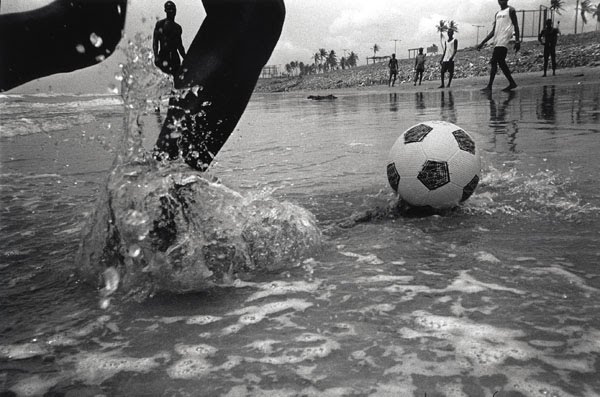
After dispatching the USA in their last game of the World Cup, Ghana made history as being the fourth African team to reach the quarter final when they faced Uruguay tonight. Ghana has already done better than four years ago when they were knocked out in the last 16. It seemed that all of Africa celebrated Ghana's qualification for the quarter finals of the World Cup. And many hoped the Black Stars would beat Uruguay to become the first African team to qualify for a World Cup semi-final. Unfortunately, after an intense game and many heart stopping moments, Ghana lost on penalty shoot-outs but went home heroes to their own country who welcomed them with all the Ghanaian pride you could imagine.
Not only does Ghana have a world class team who represent a whole continent, but closer to home they also are one of the friendliest, most stable countries in West Africa with rich local heritage.
From the pristine sandy beaches in the south to the hilly and rainforest covered north, bordered by Togo to the east, Côte d’Ivoire to the West and Burkina Faso to the North, Ghana is truly a gateway to West Africa. And what a gateway it is! For the beginner to Africa, the traveller who wants to experience the ‘dark continent’ first-hand, the cautious tourist wanting to learn more about West Africa’s culture, this country is a great choice. Here are a few examples of the unique things you can do and see in the Black Stars home country.

For the avid historian
Ghana, unfortunately, is infamously known for being one of the main departure countries from which the slave traders filled their ships with ‘cargo’ to take them to the ‘New World’, and the remnants of this barbaric trade are still present. On cape coast near Accra, the capital, Elmina castle is the oldest European building in sub-Sahara Africa. According to records, thousands of captives passed through the dungeons of both castles to be shipped as commodities.
Museums are also numerous, and you will not be disappointed with the amount of choice. From the ‘National Museum of Ghana’, home to a varied collection of objects relating to the ethnography and culture of Ghana, to the ‘Dubois Memorial Centre for Pan African Culture’, a national historic monument in its own right documenting the life of the influential Du Bois family, passing by ‘Museum of Science and Technology’ displaying and preserving natural history specimens found in Ghana, you will need an entire lifetime to satisfy your curiosity.
Recently vestiges from an ancient civilisation were found in a remote part of the country which has questioned many theories that were put forward about the history of the regions people. To read the BBC article on the find, click here.
Or to learn about the possibilities to visit the country to learn about the history of slavery, click here.

For the budding naturalist
The vegetation of Ghana ranges from Evergreen forests and Savannah grasslands, to the lowlands to the highlands which boasts the highest point in the country, Mount Afadjato which is 885 metres high and found in the Volta region. The landscape is very suitable for both hiking and trekking which will allow you to get up-close to the wide variety of flora and fauna species.
For example, Tafi-Atome in the Volta region, is home to 300 endangered Mona and Pata Monkeys and is a traditional conservation area backed by statutory enforcement in co-operation with local communities. These monkeys are found in a remnant patch of forests, which has survived fire and human disturbance around the village.
Agumatsa wildlife sanctuary is another place of interest for those interested in wildlife. The area boasts Ghana’s highest waterfalls. The beauty of the falls is enhanced not only by the towering face of the gorge but most impressively by the several thousands of fruit bats clinging to its sides. At the base of the falls, in the surrounding forest, butterflies of various colours and other wild animals make the area significant for conservation. The falls also plays an important part in the cultural life of the communities around it. The people regard it as a fetish protecting them in all walks of life.
For a holiday idea that will take you to the sites mentioned above, click here.

For the culture enthusiast
Like the rest of West Africa, Ghana has a rich cultural heritage
which has been passed down from generation to generation for millennia, and its origins have been lost in the midst of time. However, being ever present gives the open-minded traveller a glimpse into the various rites, rituals, ceremonies and belief systems which make this country and its people ‘oh so special’.
One of the most important cultural remnants from a bygone era is the Ashanti stemming from a once prosperous Kingdom that ruled the region. There are certain days each year on the Ashanti calendar that are set aside for a celebration at the Royal Palace. This ceremony is called Akwasidae.
During the celebration, the King is seated under a spectacular umbrella of colourful, draped cloth and is adorned in vivid cloth and massive gold jewellery which is centuries old (the Ashanti gold jewellery and masks are considered masterpieces of African art). This traditional ceremony takes place in one of the last African Kingdoms to have kept its ancient rituals alive.
But Ghana is also known for its overwhelming hospitality, and there will be no lack of people who will offer to show you their home, offer you meals or just to have a friendly chat. In the remote villages of the Volta region, you can experience the culture first hand by learning how to cook the various traditional meals, discovering the history of weaving in this area and trying your hands on the weaving process, or visiting some farms in the local communities to learn how to use local farming tools.
There is no lack of educational opportunities in Ghana, and you will surely learn a thing or two from this holiday idea.

For the adventure fiend
For the adrenaline junkie, the exercise addict or for the simple traveller looking for a bit of fun, Ghana offers the possibility to partake in an array of activities including hiking, mountain biking, surfing, canoeing, canopy walking, fishing, and many more.
Let’s take example on the possibilities of surfing. Ghana’s south coast is perfect for those wanting to learn how to ride waves. Constant warm water, no crowds and perfect waves (that’s right, no fighting for waves and no wetsuits) make Ghana’s coasts a great location for beginners and intermediate surfers. To learn more about the surfing possibilities, click here.
Sticking to the water theme, the marshes created by the Volta River, create a rarely visited environment which allows for excellent canoeing where you can observe an exotic collection of birds and a baobab grove.
Or if you fancy something different, in Kakum National Park you can find the only rainforest canopy walk experience in the whole of Africa. Suspended 100 feet above the ground, this offers you what is truly a bird's eye view of the rainforest. At this height, you don't have to be an expert to identify the colourful patterns of tropical birds as they glide through the forest below you.
Unfortunately I could not include all the amazing things available to do and see in Ghana, but I am sure that through the above description you have become curious to know more. So do not hesitate to get in touch with us at info@westafricadiscovery.co.uk with any queries about this beautiful country or any of the other 15 West African countries. Or you can visit our website here to discover all the other unique and awe-inspiring holiday ideas available in one of the most undiscovered parts of the World.