West Africa Discovery website

Please visit the West Africa Discovery website to learn more about West Africa and our selection of sustainable tourism tours, accommodations and voluteer projects.
Showing posts with label world cup. Show all posts

Thursday, 10 June 2010

Good Luck Cameroon, Côte d’Ivoire, Ghana and Nigeria!

Out of the six African teams in the World Cup this summer, four are from West Africa. It is the first time that the World Cup has been held on the African continent, and it would be a momentous occasion for its people and African football if one these teams could go all the way. West Africa is a dominant force in African football and regularly produces stars that play for top European clubs. We took a look at the four teams from West Africa and their chances of success in this World Cup.

Cameroon

Also know as the Indomitable Lions, a tribute to their habit of grinding out results, Cameroon have long been flag bearers for Africa on the world stage since their first world cup in 1982.

Cyprian, one of our tour operators in Cameroon feels confident;

“I am almost sure that Cameroon can get to the second round at the world cup, but we still need discipline in the team to produce good results.

Our super star Samuel Eto’o has had some arguments with the management. If this is resolved then he will be explosive at the world cup and his performance could help Cameroon to the quarter finals at least. That is my forecast, anyway, let’s wait and see!”

With a group including the Netherlands, Denmark and Japan it will be challenging, but not impossible. They must find a way of getting the best out of Samuel Eto'o to progress.

Côte d’Ivoire

In Côte d’Ivoire everyone is wearing orange – the colour of the strip of their national team, The Elephants. Hopes have been dampened by the fact there’ll be no Didier Drogba, but they're managed by Sven-Goran Eriksson who may have a trick up his sleeve (some England fans may disagree!).

I read that one hundred Côte d’Ivoire fans are heading to South Africa on an all-expenses paid trip to watch their team. The country's national supporters club, the National Elephants Supporters Committee, drew the 100 names from their membership. Anyone with a $4 membership was included in the draw, touted as a way to thank ordinary fans who would never be able to afford the trip to the World Cup. A local tour operator is offering a similar trip for about $4,000. Whilst this is a nice gesture and will be a great trip for these fans, it highlighted to me how unattainable it is for a lot of local fans to attend the World Cup.

Côte d’Ivoire seems to be attracted to the ‘group of death’ with the best teams in major tournaments. This time round is no different with a group including Brazil, Portugal and North Korea. There will be a chance for the talented Aruna Dindane and Salomon Kalou to make their mark, and the side has strength in holding midfielder Yaya Touré. Sven Goran-Eriksson needs to improve the underachievement of a team beaten by Algeria in the quarter finals of the Africa Cup of Nations.

Ghana

The Black Stars’ appearance at the World Cup in 2006 finally brought international recognition to a team that has long been one of the greats of Africa but somehow never qualified for the big event. They did well in the last finals in Germany with an adventurous style that won them many fans, but ending up losing to Brazil in the second round with key players missing.

Manuel our local expert in Accra says;

“We have hopes Ghana will do well in the Group stage to progress. 2006 was Ghana’s first time at the World Cup and we finished the group stage second. So I am expecting the same this time around!”

Their group includes Australia, Serbia, and Germany. Kevin Prince-Boateng's decision to play for his parents' country of origin means he could face his brother, Jerome, who has been selected by Germany where they were born. Michael Essien is injured so there is little star quality but their powerful style could be troublesome to other teams in their group.

Nigeria

This will be the Super Eagles fourth appearance in the World Cup. Meetings with Ghana in the Africa Cup of Nations have thrown up some epic games, although the Nigerians have lost the last two in the latter stages of recent tournaments. A meeting in the quarter final would be an epic encounter and sure to split the local South African support.

Nigeria will face Argentina, Greece and South Korea in their group. They have suffered a blow with Chelsea midfielder Mikel John Obi ruled out through injury, but with a squad largely drawn from top clubs it should be a confident team. Nigeria will be looking to their gifted attackers Obafemi Martins and Yakubu for goals.

Group B: Argentina/Nigeria/South Korea/Greece

Group D: Germany/Australia/Serbia/Ghana

Group E: Netherlands/Denmark/Japan/Cameroon

Group G: Brazil/North Korea/Côte d'Ivoire/Portugal

Visit the Fifa website for full group listings and fixtures.

Saturday, 5 June 2010

The World Cup: Local enthusiasm! Local benefits?

With just over a week to go, millions of people around the world will be watching their team in South Africa competing for the ultimate prize in football, the World Cup. But for many, particularly in Africa, this world cup has taken on greater significance. When South Africa was chosen to host the 2010 World Cup, it was hailed as a chance to 'give something back' to Africa. However, will the biggest event on Earth benefit some of the planet's poorest people?

The event could provide many benefits to local communities through local trade. However, according to an article in The Independent, informal traders who are a crucial part of African economy have been banned from around the 10 stadiums, reducing their chances to gain from the increased tourism. Creating more jobs for local people is also in question. The future of a project to set up public bus transport is in doubt because the government is cautious about standing up to South Africa's powerful minibus-taxi industry.

There are also question marks over Fifa's internet ticketing system that has left most of the continent unable to buy seats. Fifa kept ticket sales online until 15 April when poor sales forced them to open ticketing booths in the host country. Even though there will be a record six African teams in the finals; South Africa, Ghana, Côte d’Ivoire, Cameroon, Nigeria and Algeria, only 11,000 African fans outside South Africa have purchased tickets. Should there have been more effort to include the fans of these countries?

As well as low ticket sales, especially in the northern hemisphere, tourism visitor figures for the World Cup have been revised down to 200,000 – about the same number of people that visit South Africa during an average summer season from November to February. Local airlines and hotels have cut prices for the coming month, and local businesses are worried about the lack of financial benefit the event will bring.

However, there is some good news. Fifa president Sepp Blatter, in an interview, said that the event is about "giving back to Africa what the continent has given world football through its players.” During a press conference, the organisation pointed to the "centres for hope" - 20 football academies that it will build after the cup. These could provide opportunities to African youth to develop themselves not only in football, but also through education. Examples of how successful these academies can be are The Craig Bellamy Foundation set to open this September in Sierra Leone, and the Right to Dream Academy in Ghana.

Elsewhere, organisations such as Oxfam are trying to use this world Cup and football to connect people around the world. Their new campaign calls on fans to upload a video of their tricks to the website, www.dontdropaid.org. The campaign calls on governments not to drop the ball on overseas aid, which helps to pay for kids to go to school and for medicines and bed-nets that save the lives of millions of people who would otherwise die from HIV or malaria.

Charles Bambara, a former player in the Burkina Faso premier league who works for Oxfam in West Africa, said: “Across the continent, from Algeria to Zambia, football brings a massive ray of hope to people’s lives. We want to tap into all of that energy to say: don’t drop the ball, don’t lose sight of the goal, which is to end poverty and make life better for the world’s poorest people.”

However, despite the event being marred by controversy, one thing is for sure, this event will unite Africans from all over the continent during the World Cup. Voice of America spoke to Ben Owusu from the Ghanaian community in South Africa. He says that Africans will be uniting behind an entire continent;

“We all are coming together this time around to support that particular African team that is playing that day. To come together is the only way we are going to come close to winning the Cup. Whatever African team does well, it will be a victory for the whole of Africa. This is Africa’s World Cup.”

“Brazil, Italy, England and Germany and all those other fancy teams must realize when they land here in South Africa that they are not only playing single African countries," he said. "They must know that they are playing against an entire continent, with its population of one billion firmly behind it … the Cup should remain in Africa.”

This is going to be a very exciting month for the players and fans from the four West African nations playing in the tournament. We will update you with information on the Cameroon, Côte d’Ivoire, Ghana and Nigeria teams over the next week for the build up to the big event. For more information on West Africa, or to discover how you can be a part of the World Cup by visiting the continent yourself, visit West Africa Discovery.

Thursday, 1 April 2010

Sports Tourism Big in Africa this Summer

It is set to be a year of massive sporting events, 2010 kicked off with the Winter Olympics in Whistler, and the whole world is anticipating the FIFA World Cup in South Africa this summer. There are many economic and social benefits to hosting international events. Whistler attracted 250,000 visitors to the area and $10 billion in revenues. Along with the financial injection, a host city will see development to infrastructure, increased jobs, and a continued development model of growth even after the event has been and gone.

The World Cup Finals in South Africa this June are on an even bigger scale and could contribute 50 billion rand to the economy, while tourism could generate a further 15 billion rand, with 3.5 million fans expected to attend the tournament. Not only will this be a great boost to the continued development of South Africa but surely for the continent as a whole.

Going to South Africa to watch your team play this summer is no cheap holiday. Once you have bought your flight, paid for a hotel and calculated spending money, the costs can run into the thousands. For those who want to see the Finals in Africa this summer there is another region that is equally amazing, but tourism there is less often on the media map. On the westernmost region of the African continent, West Africa is on the flight route from Europe and America to Cape Town and will be a great destination to visit during the World Cup.

The concept of sports tourism in West Africa is nowhere near the same level as South Africa, but that could be changing with the opening of new facilities such as the Right to Dream academy in Ghana.

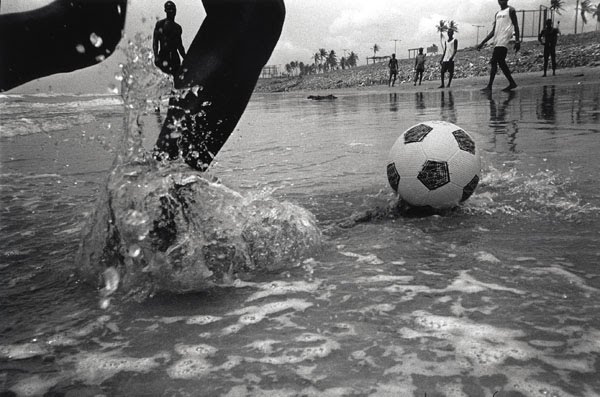
Football is the biggest sport in West Africa. Watched and followed everywhere, kids and adults alike pretend to be in their role-models shoes by playing the ‘perfect game’ in every condition, sometimes only with a ball made from rags. Famous footballers such as Didier Drogba and Craig Bellamy are using football as a tool for community development and education through the setting up football and education centres for children in West Africa. It would be great to start channelling more money from sports tourism into communities in countries such as Côte d’Ivoire and Sierra Leone where it is needed most.

In June, West Africa will be alive with passion as their football heroes battle it out on the global stage. Bars and hotels across West Africa will be showing the games, and the local people will be more than happy to welcome and share a drink with a football fan. As well as going for the African football vibe, a holiday here is sure to give an experience of Africa quite different from the roaring stadiums and hustle bustle of crowds in the South African capital. There are four West African teams in the World Cup finals this year; Cameroon, Côte d'Ivoire, Ghana, and Nigeria. These are four very different West African countries with equally amazing possibilities for rich fulfilling natural and cultural holidays.

Cameroon, for example, is home of Barcelona striker Samuel Eto’o. Also dubbed 'Africa in miniature' due to the diversity of its terrain, biodiversity and cultures, Cameroon is one of the most exciting and unexplored countries in West Africa. From lush rainforest hiding waterfalls to pristine beaches, this country has a wealth of resources which can provide tourists with the most unique and unforgettable experiences. Click here for some ideas about holidays in Cameroon.

Another football role-model, Chelsea star Michael Essien, hails from Ghana, the country whose name means ‘Warrior King’. Often considered as the friendliest country in West Africa, this country was the seat of the Royal Court of the once powerful Ashanti Empire, whose vestiges are still visible today in the Ghanaian culture. Festivals, ceremonies and social values are a testimony to the prosperous past of this amazing country. Click here to discover the opportunities for travellers seeking adventure and exploration.

For anyone looking for a different and unique experience of watching the World Cup this summer, West Africa is well worth checking out. It is a culturally rich and diverse region, full of surprises and life changing experiences. There are a wide selection of tour operators whose holidays respect the environment and support the economies of local communities. By choosing responsible tours travellers can discover the beauty of West Africa safe in the knowledge that their trip is making a difference and that money from tourism is going to communities that will really benefit from it.

Thursday, 10 December 2009

The World Cup effect: West African role models, Charity and Sports Tourism

West Africa in the World Cup

The 2010 World Cup Finals in South Africa next year will give African football teams a great opportunity to shine on the global stage (an estimated 715.1 million people watched the 2006 final). West Africa Discovery greeted news of Côte d'Ivoire, Ghana, and Nigeria’s qualifications with big smiles. After some friendly banter amongst the team about who we would be supporting next summer, we setup a poll to ask which team has the best chance of succeeding. My personal vote went to the Nigeria Super Eagles; it is always nice to see the underdogs succeed! The fact that half of the African teams that have qualified are West African goes to show the region’s dominance of African football.

On Friday afternoon I logged straight onto the sports news to check out the draw for the group stages. Obviously I was excited about England’s draw, but also wanted to check out who our West African teams had got. The draw for the group stages could prove to be challenging for the West African teams with Côte d'Ivoire drawing previous world cup winners, Brazil and Portugal, and the less formidable North Korea. Ghana was the only qualifying team to progress past the group stage in Germany 2006. They also have a tough draw facing Germany, Serbia and Australia. Nigeria who only just about qualified, face Argentina, Greece and South Korea. No easy draw for all teams concerned, but with a little luck who knows what could happen.

Of the six African teams, Cote d'Ivoire, with their world class striker Didier Drogba are the favourites for the competition. Didier Drogba plays for Chelsea in the English Premier League and has arguably the highest global profile amongst African players. Anyone who has watched Drogba in action will know that Côte d'Ivoire will be reliant on his strength and pace to get them through to the knockout stages.

Football and Charity

In the United Kingdom Drogba has a reputation of two halves. On one hand he is viewed as a talented player and goal scorer, but on the other he is can be viewed rather more negatively for being light footed and diving too often. Regardless of this, something that is less widely spoken about in the UK is his charity work and role model status for his native country. In 2007 he was appointed ‘Goodwill Ambassador’ by the United Nations Development Programme.

Drogba recently signed a new advertising deal with Pepsi worth £3million. He has pledged the entire amount to setting up a hospital and orphanage in Côte d'Ivoire that hopes to be up and running by the end of 2010. The hospital is part of the Didier Drogba Foundation - set up by the 31 year-old last year - and as well as being able to accommodate upwards of 200 patients the centre will be an orphanage. Unsurprisingly, this has had great support throughout the football and international community. Gestures and actions like these show the positive effect that football and sport in general can have on the communities that most need this investment.

Another footballer working towards helping West Africa is Welsh star Craig Bellamy. Craig Bellamy is infamous in the English Premier League for falling out with referees, managers and teammates, and is generally portrayed in a negative light in the UK media. However, despite his short temper and moments of misjudgement, he has invested time and money to help support West African communities. After visiting Sierra Leone in 2007 he has since setup the Craig Bellamy Foundation. The foundation runs a successful academy that not only teaches sport but seeks to give an education to disadvantaged children in Sierra Leone.

Craig Bellamy’s work sits alongside other schemes such as the Right to Dream academy in Ghana and supports the Score4Africa Living Football scheme which aims to use football to build community centres.

The international sports industry is worth billions of pounds, and by combining with foundations and charities, its key stars are taking the right steps in funnelling some of the funds into development amongst African communities. Let’s hope West Africa continues to produce stars like Drogba who, despite living the high life in European teams, continue to give back to the communities that nurtured their talents.

The World Cup and Sports Tourism

The World Cup in South Africa also looks likely to continue the growing development of sports tourism. Nigeria and the United States have a collaboration that should enable more American tourists to visit Nigeria to watch, and participate in traditional and contemporary sports, and related tourism activities in Nigeria. After hearing about Nigerian sports development I investigated further and read an article in TourismROI. The article describes the construction of impressive sounding luxurious resorts that cater for sports enthusiasts and by the sounds of things will provide jobs and stimulate economic opportunities in the area. However, will constructions on such a major scale take into consideration the environmental surroundings of the resort?

I think the best method for ‘sports tourism’ that will have a direct impact on the community is through grassroots volunteer schemes. There are more and more possibilities for sports ‘voluntourism’ that can help local communities to learn new skills. Projects such as Real Gap allow volunteers to travel to Ghana and help the local community by being a coach and mentor to local kids. If these projects take into consideration the criteria outlined in the Cape Town, Kerala and Belize declarations on Responsible Tourism; then not only will the communities benefit, but also the natural, cultural, social and historical heritages will be respected.

Just as in the UK, the African nation loves football. Hosting the World Cup for the first time can only help to develop community schemes and help the football industry. In 2010 the African nation will be dreaming of their stars holding the cup aloft. Just imagine the size of the party if an African team were to be victorious, an event that would unite the hopes and dreams of an entire continent. With these dreams, we must continue to use sport as a means to secure a better tomorrow for Africa.