Saturday, 17 April 2010
Is education the key to reducing ‘irresponsible' tourism?

Wednesday, 7 April 2010
West Africa festivals: move aside Glastonbury!

Thursday, 1 April 2010
Sports Tourism Big in Africa this Summer

It is set to be a year of massive sporting events, 2010 kicked off with the Winter Olympics in Whistler, and the whole world is anticipating the FIFA World Cup in South Africa this summer. There are many economic and social benefits to hosting international events. Whistler attracted 250,000 visitors to the area and $10 billion in revenues. Along with the financial injection, a host city will see development to infrastructure, increased jobs, and a continued development model of growth even after the event has been and gone.
The World Cup Finals in South Africa this June are on an even bigger scale and could contribute 50 billion rand to the economy, while tourism could generate a further 15 billion rand, with 3.5 million fans expected to attend the tournament. Not only will this be a great boost to the continued development of South Africa but surely for the continent as a whole.
Going to South Africa to watch your team play this summer is no cheap holiday. Once you have bought your flight, paid for a hotel and calculated spending money, the costs can run into the thousands. For those who want to see the Finals in Africa this summer there is another region that is equally amazing, but tourism there is less often on the media map. On the westernmost region of the African continent, West Africa is on the flight route from Europe and America to Cape Town and will be a great destination to visit during the World Cup.
The concept of sports tourism in West Africa is nowhere near the same level as South Africa, but that could be changing with the opening of new facilities such as the Right to Dream academy in Ghana.
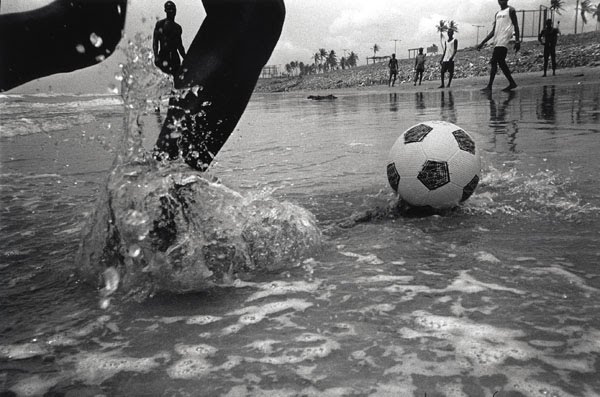
Football is the biggest sport in West Africa. Watched and followed everywhere, kids and adults alike pretend to be in their role-models shoes by playing the ‘perfect game’ in every condition, sometimes only with a ball made from rags. Famous footballers such as Didier Drogba and Craig Bellamy are using football as a tool for community development and education through the setting up football and education centres for children in West Africa. It would be great to start channelling more money from sports tourism into communities in countries such as Côte d’Ivoire and Sierra Leone where it is needed most.
In June, West Africa will be alive with passion as their football heroes battle it out on the global stage. Bars and hotels across West Africa will be showing the games, and the local people will be more than happy to welcome and share a drink with a football fan. As well as going for the African football vibe, a holiday here is sure to give an experience of Africa quite different from the roaring stadiums and hustle bustle of crowds in the South African capital. There are four West African teams in the World Cup finals this year; Cameroon, Côte d'Ivoire, Ghana, and Nigeria. These are four very different West African countries with equally amazing possibilities for rich fulfilling natural and cultural holidays.
Cameroon, for example, is home of Barcelona striker Samuel Eto’o. Also dubbed 'Africa in miniature' due to the diversity of its terrain, biodiversity and cultures, Cameroon is one of the most exciting and unexplored countries in West Africa. From lush rainforest hiding waterfalls to pristine beaches, this country has a wealth of resources which can provide tourists with the most unique and unforgettable experiences. Click here for some ideas about holidays in Cameroon.
Another football role-model, Chelsea star Michael Essien, hails from Ghana, the country whose name means ‘Warrior King’. Often considered as the friendliest country in West Africa, this country was the seat of the Royal Court of the once powerful Ashanti Empire, whose vestiges are still visible today in the Ghanaian culture. Festivals, ceremonies and social values are a testimony to the prosperous past of this amazing country. Click here to discover the opportunities for travellers seeking adventure and exploration.
For anyone looking for a different and unique experience of watching the World Cup this summer, West Africa is well worth checking out. It is a culturally rich and diverse region, full of surprises and life changing experiences. There are a wide selection of tour operators whose holidays respect the environment and support the economies of local communities. By choosing responsible tours travellers can discover the beauty of West Africa safe in the knowledge that their trip is making a difference and that money from tourism is going to communities that will really benefit from it.
Wednesday, 24 March 2010
Sustainable tourism: Educational field trip for local secondary school students in Nigeria
Monday, 15 March 2010
A journey through the Kingdom of Ife

When German archaeologist Leo Frobenius first discovered beautiful terracotta sculptures and copper cast head pieces in Nigeria in 1910, he proclaimed that he had discovered Plato’s lost city of Atlantis. European attitudes were so negative to African abilities that he reasoned that the artworks must be the work of foreign settlers, inconceivable to be created by African hands.
Eventually as more works surfaced through further discoveries, explorers began to change their attitudes. The Western world was amazed by their level of detail and quality, so much so in fact that when the exhibition was first opened to the public in the British Museum back in 1948 the London News praised the artworks as "Mysterious Ife Bronze Heads: African art worthy to rank with the finest works of Italy and Greece." Having visited the Kingdom of Ife exhibition at the British Museum last weekend I would have to agree!
This collection has been two years in the making with collaboration between the British Museum, the Museum for African Art, and the Fundación Marcelino Botín in Santander, Spain, and all made possible by Nigeria's National Commission for Museums and Monuments. It is the first time many of these works have been seen outside Nigeria, and most of the near one hundred objects are on loan from museums in Lagos and Ife. Before shipping the artefacts to London, the British Museum sent a team to Nigeria to train local museum staff in packing objects for loans, installing exhibitions and conservation.
The large range of artefacts on display is breath-taking and the collection shows the complexity and mystery of the Kingdom of Ife, a rich and powerful West African city-state in what is now south-west Nigeria.
The origins of Ife can be traced back to 800AD, the heartland of the Yoruba people and grew due to trade links in the 12th to 15th century. The kingdom fell into decline when other city states like Benin emerged. The artworks give an amazing cross section of Ife society; including royalty, slaves, warriors and the sick. Many of the masks have facial markings created by facial striations or in some cases the mask had raised welts created using blister beetles. Cantharidin from these beetles is a poisonous chemical causing blistering of the skin, a practice so painful that it had to be abandoned. Another sculpture that really stood out was that of a man suffering from testicle elephantiasis who had probably travelled to Ife to be cured.
However, the sculptures that are most likely to capture the imagination of the visiting public are the magnificent copper heads that depict Ife royalty. Many of these heads were worn in ceremonies even though some of them weigh up to 9kg! The process used to create the copper and brass sculpture is called lost-wax. Check out this video to see how it’s done, an amazing and skilful technique.
The £8 entry fee was worth every penny and I would recommend the exhibition to anyone. This is another example of a renewed interest in West African culture as outlined in Thomas’ previous blog. I for one cannot wait for the summer in the UK and the festival listings that are sure to feature many great West African musicians.
Kingdom of Ife is at the British Museum, Great Russell Street, London, until June 6th.
Sunday, 14 March 2010
A Tribute to the Nigerian Mother… near and far by Iyaniwura Adewunmi
She nurtures you from birth, watching your every step.
Your pain becomes hers.
She sacrifices her time, listening attentively to your every worry
Her words act as a comfort blanket with whispers of understanding
Carefully placed words are laced with trickles of wisdom
She breaks down barriers with unconditional love
You want to give up, but she breaks your fall
You’re discouraged but she stands you up ‘TALL’
‘My Mum is the fireplace of my family: The key focal point, constantly providing support, warmth, continuous love and understanding’ Ejiro.
The Nigerian Mother…
There is no Substitute.
She loves you regardless, she disciplines you regardless.
She understands what you can’t or won’t say, slowly piercing your thoughts
She smiles, you giggle. She frowns, and you know you’ve been warned…
She nags you, because she can. It’s called ‘Discipline 101’
She is 90% right ALL THE TIME. And you are lucky with the other 10%.
You say ‘I am an adult’! She smiles sheepishly and you catch the twinkle in her eye. At that moment you know you will always be her child.
By Iyaniwura (which translates to ‘Mother is Gold’ in the Nigerian Language of Yoruba)
Saturday, 6 March 2010
The increasing popularity of West Africa
Four years ago I embarked on a life-changing journey to Senegal, to live and study there. I remember before leaving that none of my friends or family in the UK could tell me the location of one of West Africa’s 16 countries, let alone tell me the name of one of its hundreds of tribes, or tell me about the climate in a particular region. Nor had they ever heard of Amadou & Mariam, Tinariwen or Ali Farka Toure, now big names in most of the major European summer music festivals. Thanks to increased media coverage such as articles in the Guardian and the Independant, covering a range of topics from politics to travel and music coming out of West Africa reaching out to the millions at big UK festivals. Documentaries on the National Geographic and Discovery channels introducing us to different tribal systems and natural wonders and various exhibitions displaying the region’s rich cultural heritage. West Africa is coming out of the ‘black hole’ – as someone described the region to me at last year’s WTM Trade Show - to become a region of the world that inspires, intrigues, mystifies and excites the Western cultural scene.
Why is it only now that we are really discovering a region of the world which is only five hours away by plane? What has made the eyes of the West’s popular culture scene turn towards the likes of Senegal and Sierra Leone, Mali and Cameroon?
West Africa has been off the media map in terms of positive stories for a long time - the only stories that had come out of the region were tales of bloody civil wars, gold and diamond mining, corrupt leaders, disease and famine - but now that is changing; and we are learning a lot more about the deeper aspects of the rich heritage of West Africa.
Musically, West Africa produces some of the most talented acts in/on the so-called ‘World Music’ scene and has included some of the most famous musicians to come out of Africa. Festival organisers such as Glastonbury Festival and WOMAD are now queuing up to get the likes of Tinariwen (Mali), Ismael Lo (Senegal), Baka Beyond (Cameroon) and the Sierra Leone Refugee all stars, booked for the main stages. But also small events such as the Fringe festival in Brighton display musical and dancing acts from West Africa in their Africa Unite II event this year.
Culturally, there are many documentaries being shown on TV which have introduced us to the different tribes of West Africa. The Ashanti from Ghana, the Igbo from Nigeria and the Dogon from Mali are the most well known of them, and have sparked curiosity and stimulated the hearts and minds of those who have watched these programs. Maybe this is because we lack the social values that they have, we are seeking to re-learn something lost or because we find that our lives of too much work and no play need some sort of escape route.
Proof of the ever increasing popularity of West Africa’s traditional cultures is demonstrated by the 'Kingdom of Ife' exhibition (which we will cover in next week’s blog) now showing at the British museum and is already being hailed as ‘Potentially the exhibition of the year’ by the Telegraph newspaper.
Sport is also a big influence on popular interests. Football, for example, has a lot of role models within the most supported teams in the UK who come from West Africa or have an affiliation with the region. Didier Drogba who hails from Côte d’Ivoire and plays for Chelsea is an example and is well known for his skills on the pitch; however it has also come to light that he is a big charity supporter having donated millions to build and sustain hospitals in his home country.
Another player who has created a media buzz about West Africa is Craig Bellamy (Man City) whose foundation has contributed towards setting up sports academies in Sierra Leone.
West Africa’s natural heritage has also come to our TV sets through programmes such as the BBC’s Autumn Watch which has covered Senegal, showing that West Africa has been on the migration path of many species of birds for millennia.
In terms of Tourism, the Guardian and Times travel sections have regularly published articles describing West Africa as an alternate, exciting and new destination for travellers seeking new experiences full of educational opportunities, coupled with sea, sun and beaches (see our previous blog on the potential for West Africa as a Responsible Tourism destination). It also seems as though tourism to the geographical region of West Africa is set to increase. The latest Brussels Airlines' news stating that the airline is now flying directly to Ghana, Benin, Togo and Burkina-Faso from European destinations can only be a sign that the shores of West Africa are worthwhile touristic destinations to fly to.
All the above factors have contributed to the UK’s increasing interest in West Africa and that interest is only set to grow even stronger because of the sheer diversity of cultural, natural and historical heritage still to be discovered.
But instead of waiting for more news, start your own discovery by visiting our web portal (www.westafricadiscovery.co.uk) , joining us on Facebook or following us on Twitter. We look forward to welcoming you!